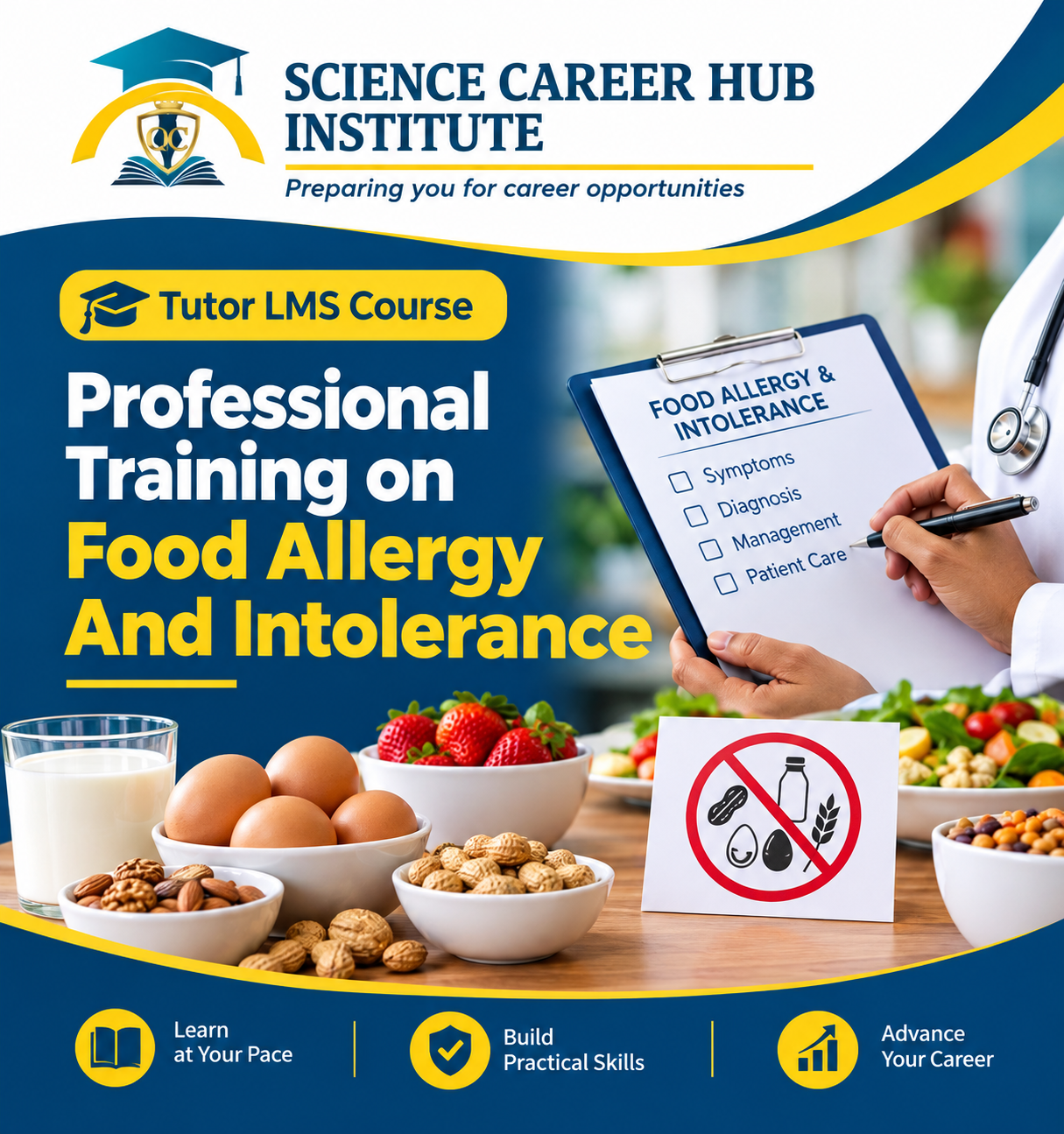
Professional Training on Food Allergy And Intolerance
About Course
COURSE OVERVIEW
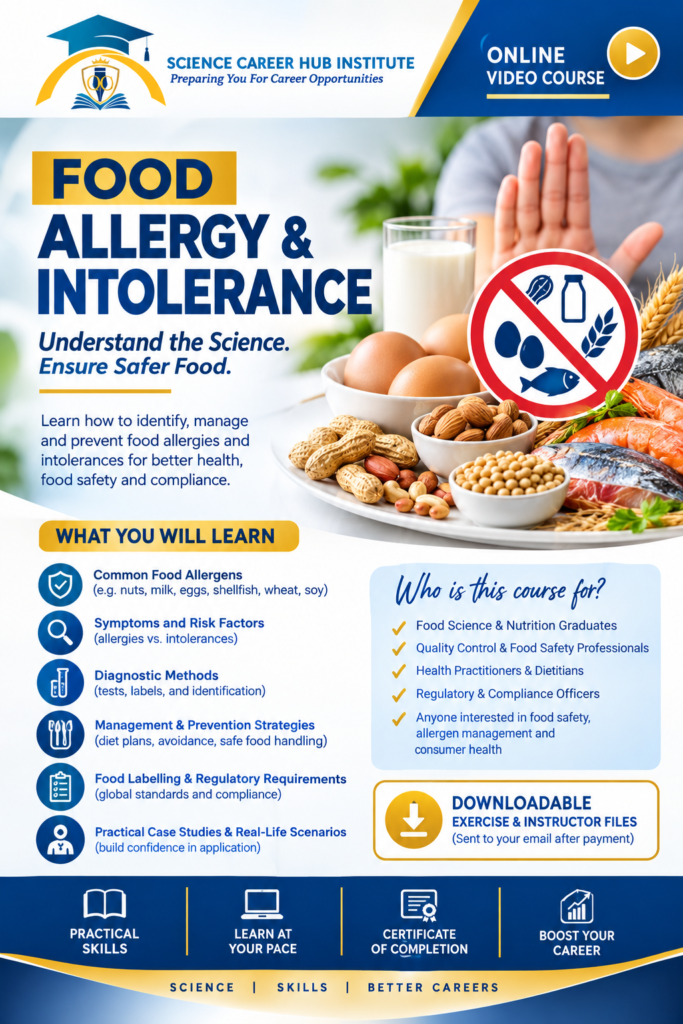
This professional online video course provides a comprehensive introduction to Food Allergy & Intolerance and the practical allergen-management practices required in food manufacturing and food safety environments.
The training explains the difference between food allergies and food intolerances, how allergic reactions occur, common allergens, recognition of allergic reactions and anaphylaxis, allergen labelling, precautionary allergen labelling, allergen risk assessment, cross-contact prevention, production-floor controls, cleaning validation, employee hygiene, supplier verification, and allergen incident response.
Participants will also gain an understanding of how allergen management relates to food safety and quality systems, including the expectations discussed in BRCGS, SQF, FSSC 22000 and IFS Food.
The course is delivered as a single comprehensive online video presentation, making it suitable for self-paced learning and professional development.
TARGET AUDIENCE
This course is suitable for:
-
Quality Control and Quality Assurance personnel
-
Food Safety professionals
-
Food manufacturing and production personnel
-
Production and line operators
-
Food scientists and technologists
-
Laboratory personnel
-
Food safety and compliance personnel
-
Food business professionals
-
Hospitality and catering personnel
-
Graduates and science professionals seeking food manufacturing career skills
-
Professionals interested in allergen management and food safety
WHAT YOU WILL LEARN
By completing this course, participants will learn how to:
-
Explain what food allergy and food intolerance mean.
-
Distinguish clearly between food allergy and food intolerance.
-
Identify the nine major allergens covered under U.S. federal regulation.
-
Explain how allergic reactions occur.
-
Recognize common signs and symptoms of allergic reactions.
-
Understand severe allergic reactions and anaphylaxis.
-
Understand food allergen labelling requirements.
-
Understand precautionary allergen labelling and when it may be appropriate.
-
Identify potential sources of allergen cross-contact.
-
Apply practical allergen-control measures on the production floor.
-
Understand segregation and production scheduling for allergen control.
-
Understand the use of dedicated and colour-coded tools and equipment.
-
Understand cleaning validation and verification practices.
-
Identify common cross-contact points within food production.
-
Apply appropriate employee hygiene and handling practices.
-
Understand the importance of supplier allergen declarations.
-
Explain the basic steps for responding to an allergen incident.
-
Understand containment, assessment, notification, recall and corrective action.
-
Understand the importance of root-cause analysis and preventive action.
-
Recognize the role of allergen management in food safety audits.
-
Understand the relevance of BRCGS, SQF, FSSC 22000 and IFS Food to allergen management.
-
Apply allergen-management knowledge to workplace and career situations.
COURSE OBJECTIVES
The main objective of this training is to equip participants with practical knowledge and workplace awareness needed to identify, control and manage food allergen risks.
At the end of the training, participants should have a stronger understanding of allergen control, food labelling, cross-contact prevention, production-floor practices and incident response.
COURSE CONTENT
The single online video presentation covers the following areas:
-
Foundations of Food Allergy & Intolerance
-
Understanding Food Allergy
-
Understanding Food Intolerance
-
Allergy vs. Intolerance
-
Major Food Allergens
-
Recognizing Allergic Reactions
-
Food Allergen Regulation & Compliance
-
Food Labelling Requirements
-
Precautionary Allergen Labelling
-
Allergen Management on the Production Floor
-
Cleaning Validation & Cross-Contact Prevention
-
Employee Hygiene & Handling Practices
-
Allergen Incident Response
-
GFSI Schemes & Allergen Audits
-
Career Readiness and Workplace Application
COURSE FORMAT
Delivery Method: Single Online Video Presentation
Learning Mode: Self-Paced Online Learning
Course Type: Professional Development Training
Assessment: Online Course Assessment
COURSE REQUIREMENTS
Participants will need:
-
A smartphone, tablet or computer
-
Reliable internet connection
-
Ability to watch the complete online video presentation
-
Basic understanding of English
-
Commitment to completing the course assessment
PREREQUISITES
No specific academic qualification is required to take this course.
Basic knowledge of food safety, food handling or food manufacturing may be helpful, but it is not mandatory.
LEARNING OUTCOMES
Upon successful completion of the course, participants should be able to:
-
Describe the fundamental concepts of food allergy and intolerance.
-
Differentiate between immune-related food allergies and food intolerances.
-
Identify major food allergens and potential sources.
-
Recognize signs and warning indicators of allergic reactions.
-
Identify potential allergen cross-contact hazards.
-
Explain practical methods of allergen segregation and control.
-
Understand the importance of effective cleaning and verification.
-
Understand allergen labelling and precautionary allergen information.
-
Explain the basic response process following an allergen incident.
-
Understand the importance of documentation, corrective action and root-cause analysis.
-
Recognize the importance of allergen management during food safety audits.
-
Apply acquired knowledge to relevant food manufacturing and quality-related roles.
ASSESSMENT
Participants will complete an online assessment based on the content presented in the course video.
The assessment is designed to evaluate the participant’s understanding of food allergy, food intolerance, allergen control, cross-contact prevention, labelling, incident response and workplace practices.
CERTIFICATE
Participants who successfully complete the required course activities and assessment may receive a Certificate of Completion from Science Career Hub Institute, subject to the institute’s applicable certification requirements.
COURSE COMPLETION
Participants are encouraged to watch the complete video presentation and successfully complete the online assessment to demonstrate their understanding of the course content.
SCIENCE CAREER HUB INSTITUTE
Preparing You for Career Opportunities
Course Content
Professional Training on Food Allergy AndIntolerance
-
Professional Training on Food Allergy And Intolerance
12:18 -
Professional Training on Food Allergy AndIntolerance
Student Ratings & Reviews